
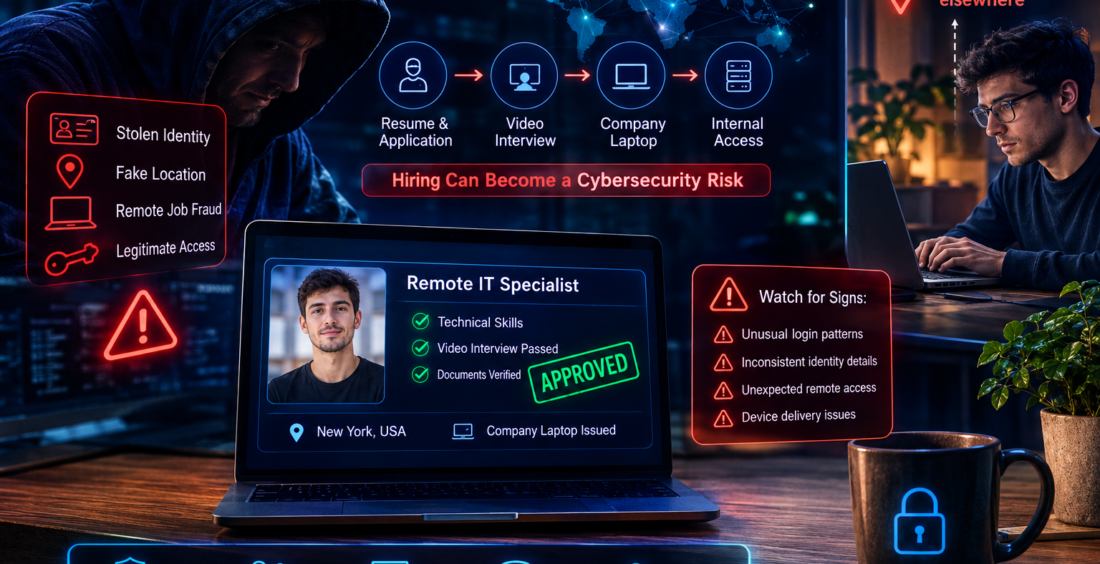
Fake remote IT workers are turning recruitment into a cybersecurity problem. An applicant may look qualified, pass technical interviews and appear to be working from the location listed on their resume. Behind the scenes, however, the identity, location or even the person doing the work may be different.
The risk goes beyond hiring fraud. Once a fraudulent worker receives a company laptop, credentials and access to internal systems, the organization may have given an attacker something criminals usually have to steal: legitimate access.
When the Job Interview Becomes Part of the Attack
Employers review resumes, conduct video interviews and verify documents before giving someone access to company systems.
The FBI has warned that North Korean IT workers have used stolen identities and posed as workers from other countries to obtain remote technology jobs. In some cases, facilitators helped make workers appear to be located in the United States.
The applicant may genuinely have strong technical skills, making the fraud harder to notice.
A Real Employee Account Can Be More Valuable Than Malware
Traditional cyberattacks often begin with stolen credentials or a vulnerable system.
A fraudulent employee starts from a different position. The company may create the account, send the laptop and grant access as part of onboarding.
The worker may have access to source code, cloud platforms, development tools or internal documents. Depending on the role, they may also be able to install software or connect to sensitive environments.
This is why hiring security and cybersecurity are becoming more closely connected.
Identity Verification Needs to Go Beyond a Resume
A polished resume and successful video call are no longer enough for high-access roles.
Organizations should verify identity through trusted processes and check whether information provided during hiring is consistent. Unexpected changes in location, payment details, contact information or equipment delivery should receive attention.
The goal is not to make every remote applicant feel like a suspect. It is to make identity verification strong enough that a stolen identity cannot easily survive the hiring process.
The Company Laptop Can Tell a Different Story
Device activity can reveal things an interview cannot.
The FBI has warned about laptop farms, where company devices are shipped to addresses inside the United States and then remotely controlled by workers located elsewhere. This can make network traffic appear more local than the person using the machine.
Organizations should know where corporate devices are sent, who receives them and how they are accessed.
Unexpected remote access software, unusual login patterns or activity that does not match the employee’s expected location may deserve investigation.
Access Should Grow With Trust
A new employee does not always need broad access on the first day.
Companies can reduce risk by giving people only the systems required for their role and expanding access when there is a clear business need.
Developers may need source code but not every production system. Contractors may need access only for the length of a project. Administrator permissions should be especially limited.
If an identity turns out to be false, limited access can reduce the amount of information or infrastructure exposed.
Watch for Warning Signs Without Profiling People
Security controls should focus on behavior and verification, not nationality, accent or appearance. Legitimate remote workers come from everywhere, and assumptions about someone’s background are neither reliable nor appropriate security controls.
Useful signals are concrete.
A worker repeatedly refuses live interaction, account activity appears in unexpected places, identity details cannot be verified or company equipment behaves in ways that do not match the job.
Any one signal may have an innocent explanation. Several together may justify a closer look.
Offboarding Matters as Much as Hiring
If a suspicious worker is identified, removing access needs to happen quickly.
Disable accounts, revoke active sessions, recover or remotely secure company devices and review what data the worker accessed. Security teams should also check for new accounts, credentials, code changes or remote access tools created during employment.
Simply ending the employment relationship may not remove every technical path left behind.
The incident response process should treat fraudulent employment as a possible security compromise.
Hiring Is Now Part of the Security Perimeter
The workplace has changed. Employees can contribute from almost anywhere, and companies benefit from a wider talent pool.
That flexibility should continue.
But remote hiring means organizations may grant significant digital access before ever meeting someone in person. Attackers have noticed that opportunity.
Strong cybersecurity therefore starts earlier than the login screen. It can begin during recruitment, identity verification, device delivery and onboarding.
The question is not simply, “Can this person do the job?”
For roles with meaningful system access, companies also need to ask, “Have we verified who is actually doing it?”
Contributed by GuestPosts.biz
Further Reading: Cyber Gear Thought Leadership Series







Comments are closed.