
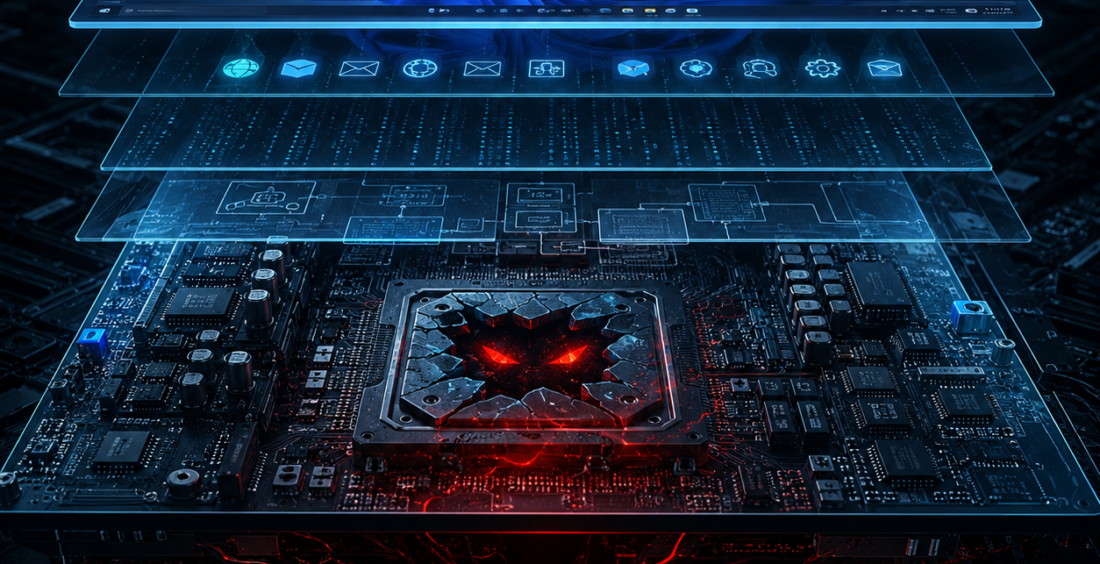
UEFI security is easy to overlook because most people rarely think about what happens before Windows or Linux starts.
UEFI firmware helps initialize hardware and launch the operating system. Secure Boot is designed to make that startup process safer by allowing trusted software to run during boot.
The concern is what happens when attackers find a way into that layer.
Malware operating below the normal operating system can be difficult to see and may survive actions that would remove an ordinary infection.
That makes firmware security an important cybersecurity issue.
Why the Boot Process Matters
Most endpoint security tools begin working after the operating system starts.
Firmware comes earlier.
If an attacker can execute malicious code during the boot process, they may gain a powerful position before many normal defenses are active.
But the potential impact is serious because firmware sits close to the hardware and can influence everything that loads afterward.
Secure Boot Depends on Trusted Components
Secure Boot checks digital signatures before allowing certain boot components to run.
The idea is straightforward. If the code is signed by a trusted authority and has not been altered, the system can allow it to continue.
The challenge is that trusted components can contain vulnerabilities too.
In July 2026, researchers disclosed old Microsoft-signed UEFI shim applications that could be abused to bypass Secure Boot on many systems.
The issue showed how an old trusted component can remain useful to attackers long after the software itself has been forgotten.
A Signed File Is Not Automatically a Safe File
Firmware security highlights the limits of digital trust.
A valid signature proves that a component was signed by a recognized key. It does not guarantee that the component is free from security flaws.
Attackers may look for vulnerable but legitimately signed software that can be brought onto a system and abused.
This is similar to code-signing problems elsewhere in cybersecurity.
Trust decisions need to consider whether software is still approved, supported and known to be safe, not simply whether it has a valid signature.
Firmware Updates Need Attention Too
People are used to updating browsers and operating systems.
Firmware updates are easier to ignore.
They may arrive through the device manufacturer, enterprise management tools or operating system update channels. In some environments, firmware is updated far less often than normal software.
That can leave known weaknesses in place.
Intel published multiple UEFI firmware security advisories in 2026, including vulnerabilities that could lead to privilege escalation or information disclosure.
Organizations should include firmware in vulnerability and asset-management processes instead of assuming hardware-level software takes care of itself.
Inventory Makes Firmware Security Possible
A company cannot respond quickly to a firmware advisory if it does not know which devices, motherboard models or firmware versions it operates.
That sounds basic, but large fleets are messy.
Employees use different laptop generations. Servers may come from several vendors. Specialized equipment can stay in service for many years.
Asset inventories should include enough hardware and firmware information to identify affected systems when an issue is announced.
Without that visibility, security teams may know a vulnerability exists but have no fast way to determine where it matters.
Recovery Can Be More Complicated
A normal malware incident might be resolved by reinstalling the operating system and resetting credentials.
Firmware compromise can require a different response.
If malicious code survives below the operating system, reinstalling Windows may not remove it. Teams may need to reflash firmware, replace hardware or follow vendor-specific recovery procedures.
Security teams should understand which devices support secure recovery, how firmware can be restored and whether important configurations are documented.
Physical Access and Privilege Still Matter
Firmware attacks should not be exaggerated.
Many require the attacker to have local access, administrator privileges or an earlier foothold on the machine.
That means familiar controls still reduce risk.
Limit administrator access. Protect devices from unauthorized physical access. Patch operating systems and applications. Use endpoint detection to stop attackers before they gain the privileges needed to reach deeper layers.
Firmware security is another layer of defense, not a replacement for the basics.
Cybersecurity Starts Before the Login Screen
UEFI and Secure Boot rarely appear in everyday security conversations because they usually work quietly in the background.
That is exactly why they matter.
Attackers look for layers defenders overlook, especially when those layers provide persistence or privileged access.
Organizations should keep firmware updated, track hardware versions, follow vendor advisories and understand how Secure Boot trust is managed.
The question is not only, “Is this computer patched?”
It is, “Can we trust what runs before the operating system even starts?”
As attacks move deeper into devices, that question becomes part of modern cybersecurity hygiene.
Contributed by GuestPosts.biz
Further Reading: Cyber Gear Thought Leadership Series







Comments are closed.