
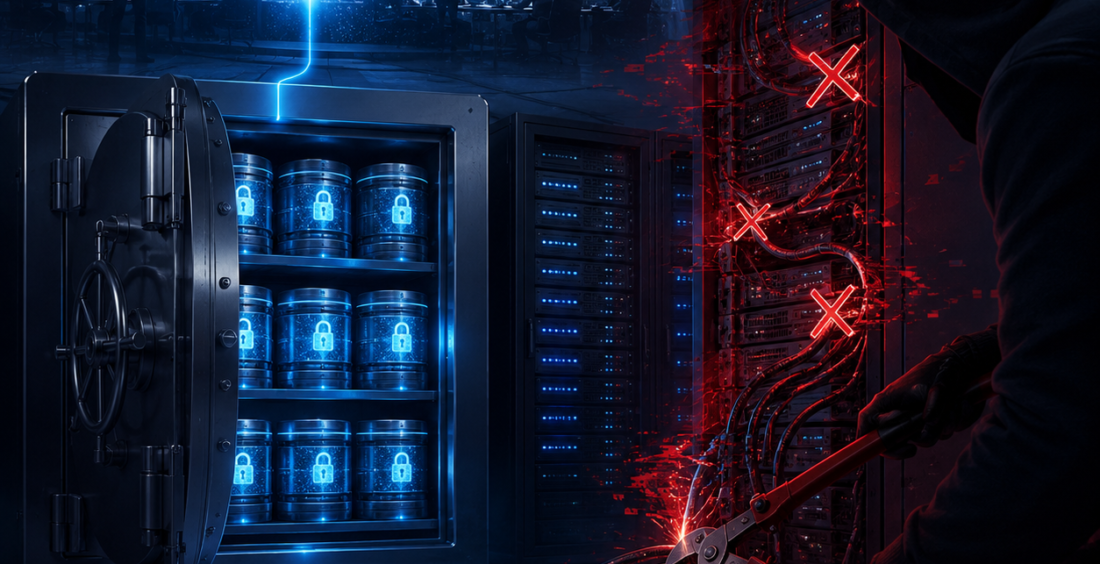
Backups are supposed to be the safety net after a cyberattack. If ransomware encrypts production systems, a company can restore clean data and get back to work.
Attackers understand that logic too.
That is why backup sabotage is becoming a serious cybersecurity concern. Criminals may try to delete recovery points, compromise backup accounts or damage the systems a business plans to use during an incident.
If the backup disappears with the production data, the attacker gains far more leverage.
Backups Are Valuable Because They Reduce Pressure
Ransomware works by creating urgency.
When systems are down, employees cannot work and customers may lose access to important services. Reliable backups give the organization another option besides paying the attacker.
That makes recovery infrastructure a natural target.
AWS warned in August 2026 that ransomware, accidental deletion and full account compromise can threaten both primary data and recovery points when they share the same security boundaries.
The lesson is simple: a backup is only useful if the attacker cannot destroy it too.
One Administrator Account Should Not Control Everything
A common weakness is using the same powerful identity across production and backup systems.
If an attacker steals that administrator account, they may be able to reach servers, delete snapshots and change backup settings from one place.
Separating responsibilities makes that harder.
An account used to manage production systems should not automatically have permission to erase recovery copies. Backup administrators should use strong authentication, limited privileges and separate credentials where possible.
The goal is not to make recovery complicated. It is to prevent one compromised identity from becoming a master key.
Immutable Backups Change the Attacker’s Options
An immutable backup is designed so that it cannot be changed or deleted during a defined retention period.
That can be useful during ransomware.
IBM describes immutable backups as read-only copies that protect against ransomware, corruption and accidental deletion by preventing stored data from being altered during the retention period.
Immutability does not stop the original breach.
It does make it harder for an attacker who reaches the backup system to erase every clean recovery point.
That difference can determine whether a company has a realistic path back.
A Backup Is Not Proven Until It Has Been Restored
Many companies know that backups are running because a dashboard shows green check marks.
Regular recovery testing turns assumptions into evidence.
Security and IT teams should practice restoring important systems, understand how long the process takes and document which services need to come back first.
A ransomware incident is a bad time to learn that the recovery plan depends on something that was also compromised.
Cloud Backups Need Separation Too
Moving backups to the cloud does not automatically make them safe.
If production and recovery resources sit inside the same cloud account with the same administrator access, a full account compromise can affect both.
Organizations should consider separate accounts, protected vaults and policies that prevent ordinary administrators from deleting important recovery data.
The exact design will depend on the cloud platform and business needs.
What matters is creating boundaries.
An attacker who compromises one workload should have to cross additional security controls before reaching the copies needed for recovery.
Watch for Backup Changes Before the Crisis
Backup systems produce useful warning signs.
Unexpected deletion requests, changes to retention policies, disabled jobs or unusual administrator logins may indicate that someone is preparing the environment for a destructive attack.
Those events should not disappear into routine infrastructure logs.
Security teams need alerts for high-impact changes and a clear process for checking whether they were authorized.
The strongest time to detect backup sabotage is before the ransomware payload starts encrypting production.
Recovery Credentials Need Their Own Protection
Organizations should also think about the credentials required during restoration.
If all recovery passwords are stored in the same compromised directory or password vault, an incident may lock defenders out of their own backups.
Emergency access accounts should be protected, tested and stored in a way that remains available when normal identity systems are unavailable.
This is cyber resilience under pressure.
Backups Are Part of the Security Perimeter
Backups used to be treated mainly as an IT operations responsibility.
Ransomware has changed that.
Recovery systems now sit directly inside the cybersecurity battle because they determine how much pressure an attacker can create.
Businesses should separate backup access, use immutable recovery points where appropriate, monitor dangerous changes and test restores regularly.
The most important question is not, “Do we have backups?”
It is, “Can we still recover if the attacker gets administrator access before we notice?”
That question exposes the difference between having copies of data and having a recovery strategy an attacker cannot easily take away.
Contributed by GuestPosts.biz
Further Reading: Cyber Gear Thought Leadership Series







Comments are closed.