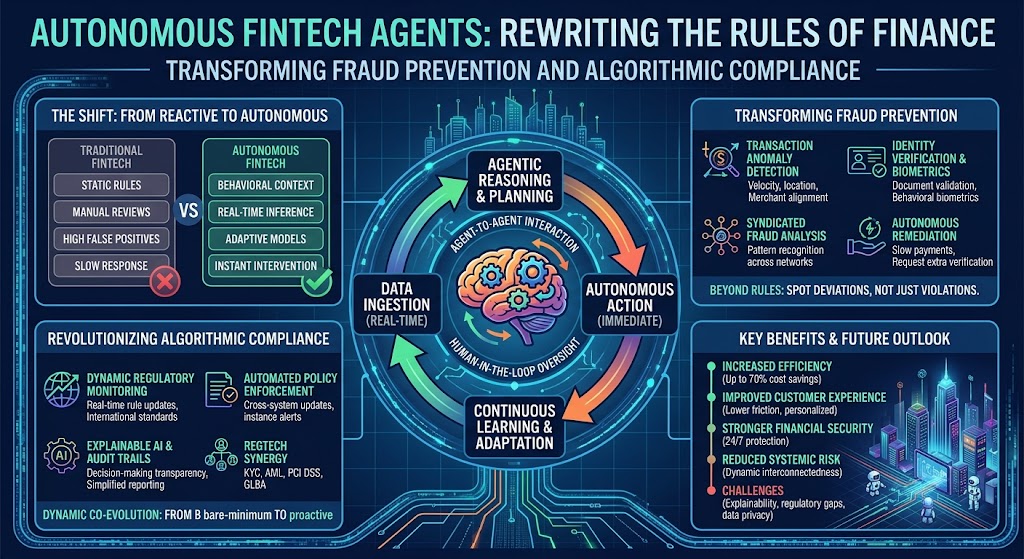
The financial services industry operates in an environment of accelerated transaction volumes, rigorous regulatory oversight, and evolving fraud tactics. Modern financial institutions process multiple digital transactions globally every day, across payment gateways, trading desks, and international settlement channels. This necessitates stringent risk management practices including outsized compliance personnel, manual audit queues, and legacy fraud detection software. But traditional rule-based fraud detection
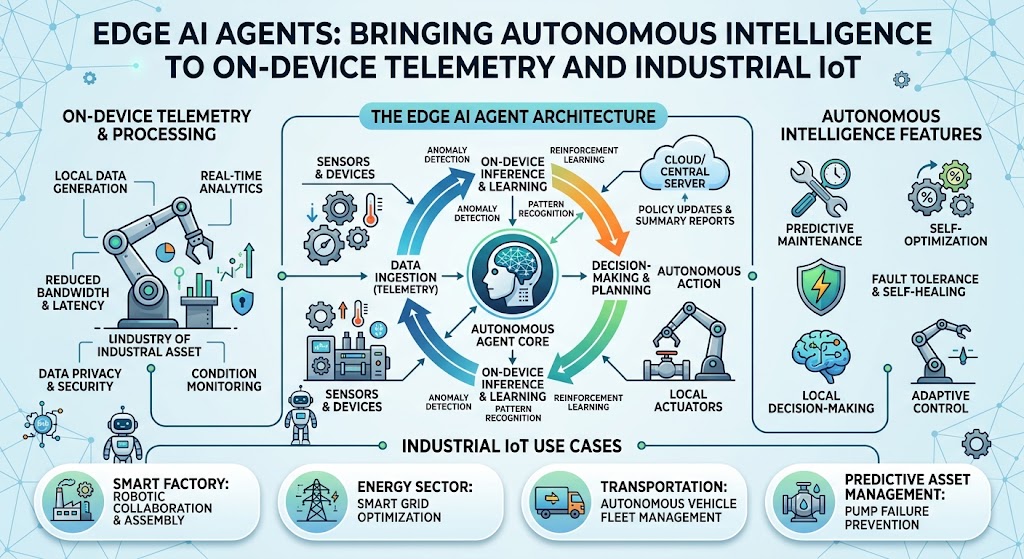
For the majority of the last decade, enterprise artificial intelligence has been heavily centralized in cloud computing infrastructure. Models have been hosted in data centers, and devices across the network edge have acted as data sources and operated as data collection nodes, transmitting telemetry over the internet for processing. While cloud-centric processing is effective for non-tactical applications, it introduces unacceptable levels
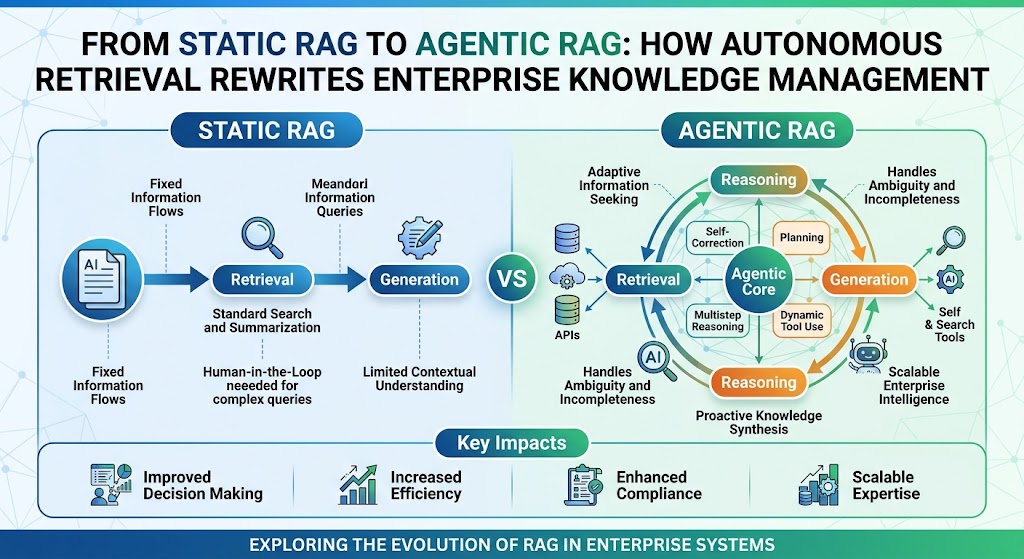
Over the first wave of enterprise language model adoption, Retrieval-Augmented Generation (RAG) became the standard pattern for grounding large language models in private data. Corporations attached vector databases to chat-style interfaces, enabling employees to ask questions over internal policy documents, product manuals, and customer service transcripts. Static RAG provided marginal improvements in contextual accuracy over vanilla language models, but proved