
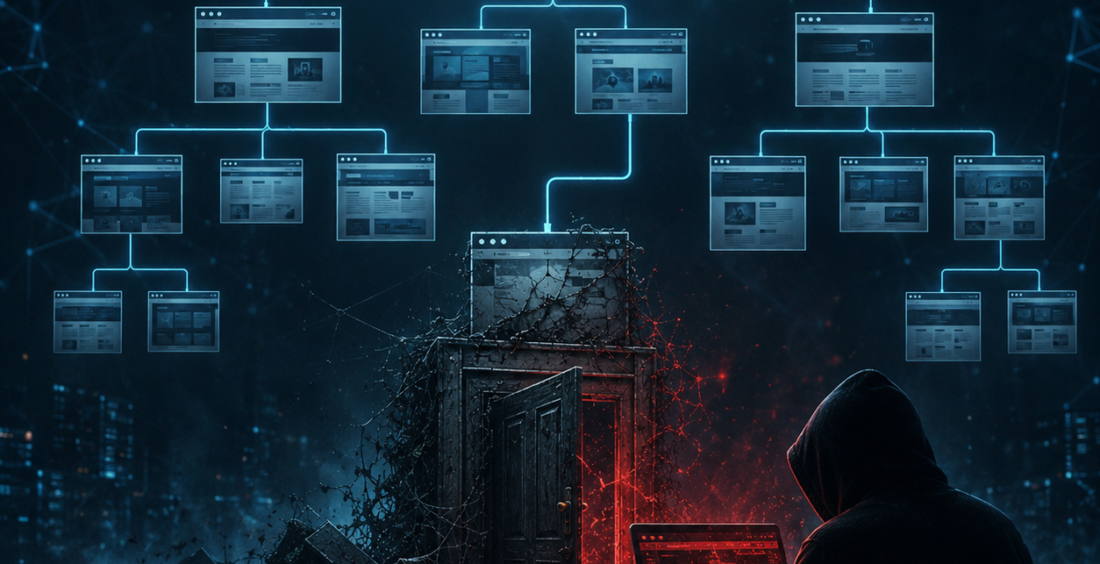
Subdomain takeover is a cybersecurity risk that can appear after a company removes a cloud service but forgets to remove the DNS record pointing to it.
The web address still looks like it belongs to the organization. The resource behind it no longer does.
An attacker may be able to claim the abandoned cloud resource and make the company’s subdomain display content they control.
That turns forgotten infrastructure into a trusted-looking platform for phishing, malware or brand abuse.
How a Subdomain Becomes Abandoned
Companies create subdomains constantly.
A marketing campaign may use event.company.com. Developers might create test.company.com. A regional team may connect a cloud application to another address.
Later, the project ends and the cloud resource is deleted.
If the DNS record remains, it can become what Microsoft calls a “dangling DNS” entry.
Microsoft’s current guidance explains that a takeover can occur when a DNS record still points to a deprovisioned cloud resource that another person can claim.
The address remains under the company domain, but the content can end up controlled by someone else.
Why the Company Name Creates Trust
A subdomain takeover is dangerous because the attacker receives something phishing criminals normally have to imitate: a real company domain.
A page hosted at support.company.com or portal.company.com may look trustworthy to employees, customers and security tools.
Attackers could use that trust to host fake login pages, redirect users or distribute malicious content.
Microsoft also warns that vulnerable subdomains can sometimes be used to harvest cookies, depending on how web applications are configured.
The technical weakness may start with DNS housekeeping, but the consequences can reach identity and customer trust.
HTTPS Does Not Automatically Save the Situation
People are often told to look for HTTPS and a padlock before trusting a site.
That advice is useful against some attacks, but it does not solve subdomain takeover.
A malicious actor who successfully controls the resource behind a legitimate subdomain may also be able to obtain a valid TLS certificate for that address.
The browser can then show an encrypted connection to a site the attacker controls.
HTTPS proves that the connection is encrypted. It does not prove that the content behind the domain is still operated by the organization everyone expects.
Cloud Speed Makes Forgotten Records More Common
Cloud platforms make infrastructure easy to create and remove.
That is good for business, but it can separate responsibilities. One team may create the DNS record, another may own the cloud service and a third may shut the project down.
If nobody owns the cleanup process, pieces are left behind.
Acquisitions can make the problem worse. Companies inherit domains, applications and records from organizations with different documentation and processes.
Subdomain security therefore needs an inventory that connects DNS records with the resources they are supposed to represent.
Discovery Needs an Outside View
A company’s internal asset list may say a subdomain is unused.
An attacker sees something different: a DNS record pointing to an unclaimed service.
Security teams should regularly review public DNS and compare it with active infrastructure.
Automated tools can help identify dangling records, but someone still needs to decide whether the address is legitimate, should be reconnected or should be removed.
The same external perspective used in attack-surface management is useful here.
The question is not only what the company believes exists. It is what the public internet can still resolve.
Decommissioning Needs a Checklist
The safest time to prevent a takeover is when a service is being removed.
Teams should delete or update DNS records before releasing the cloud resource they point to. Ownership should be clear, and temporary environments should have planned expiration dates.
Microsoft recommends removing DNS entries that point to deprovisioned resources and using processes that prevent dangling records from being created.
This is a small operational step with a large security benefit.
Deleting a server is not the end of decommissioning if the internet still has an address pointing toward it.
DNS Housekeeping Is Cybersecurity
Subdomain takeover is easy to underestimate because it begins with something that looks administrative.
No malware needs to be installed. No employee password has to be stolen first.
The attacker takes advantage of a gap between a DNS record and the cloud resource it once represented.
Companies can reduce the risk by knowing which subdomains exist, assigning owners, cleaning up records during decommissioning and continuously checking for dangling DNS.
The key question is simple: “Does every public address we own still point to something we control?”
If the answer is uncertain, an attacker may be able to turn a forgotten address into a convincing part of the company’s online presence.
Contributed by GuestPosts.biz
Further Reading: Cyber Gear Thought Leadership Series







Comments are closed.