
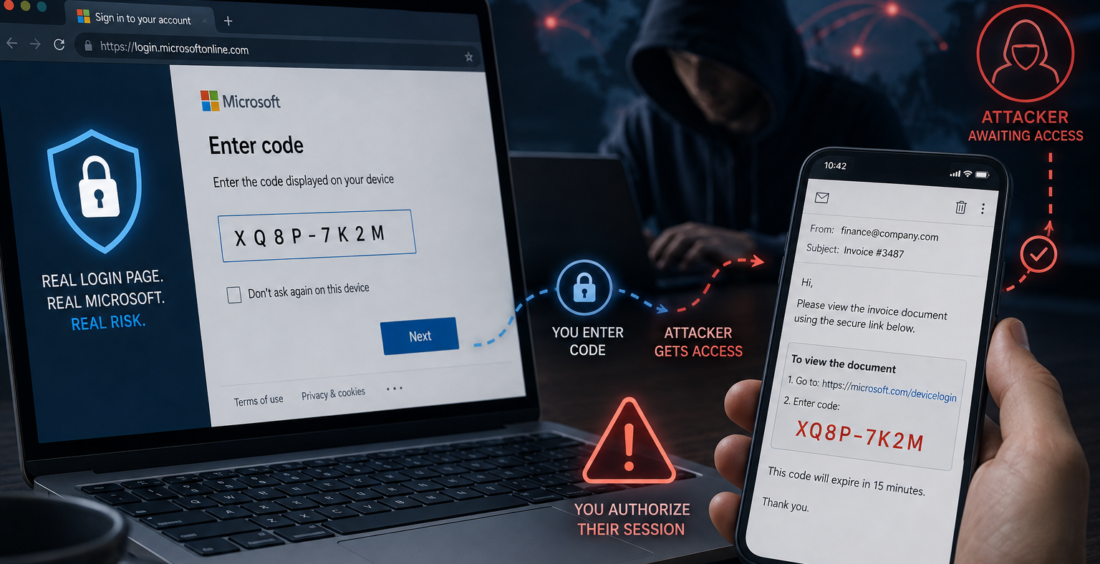
Device code phishing is a growing cybersecurity threat because the victim may never see a fake Microsoft login page. Instead, attackers abuse a legitimate sign-in process and persuade the user to complete part of the authentication for them.
That makes the attack unusually convincing.
The password may be entered on Microsoft’s real website, and multi-factor authentication may work exactly as expected. The problem is that the victim is approving a session started by someone else.
Why Device Codes Exist
Device code authentication has a legitimate purpose.
Some devices, such as smart TVs, command-line tools or equipment without a convenient keyboard, need another way to sign in. The device displays a short code, and the user enters that code on a separate browser page.
Once approved, the original device receives access.
Microsoft explains that attackers can reverse this process. Instead of a trusted device generating the request, the attacker starts the authentication flow and sends the code to the victim through a phishing message.
When the victim enters it, they may unknowingly authorize the attacker’s session.
The Login Page Can Be Completely Real
This is what makes device code phishing different from traditional credential phishing.
Employees are often trained to check the website address before typing a password. In this attack, that habit may not reveal anything suspicious because the authentication page can genuinely belong to Microsoft.
The user is not necessarily handing a password directly to a criminal.
They are granting access through a legitimate authentication system.
Microsoft documented an AI-enabled device code phishing campaign in 2026 that used deceptive emails, PDFs and other lures to persuade victims to authorize attacker-controlled sessions.
A Convincing Story Starts the Attack
Attackers still need a reason for someone to enter the code.
They may send a message about an invoice, shared document, request for proposal or business file. The victim is guided through several steps until entering the device code feels like part of opening the content.
AI tools can make those messages easier to personalize and adapt.
A finance employee may receive a different story from someone working in sales or procurement. The technical attack remains the same, but the social engineering can be shaped around the target.
That is why security awareness needs to focus on unexpected authentication requests, not only suspicious wording.
MFA Does Not Automatically Stop It
Multi-factor authentication remains essential, but device code phishing shows an important limitation.
MFA confirms that the legitimate user is present during authentication. It does not automatically confirm that the session being authorized belongs to a device the user intended to approve.
Microsoft describes device code flow as a high-risk authentication method that can be abused for phishing or access from unmanaged devices.
Organizations using Microsoft Entra can apply Conditional Access controls to restrict or block device code authentication where it is not needed.
If employees rarely use device code flow, reducing access to it can remove an unnecessary attack path.
Users Need a Simple Warning Sign
Employees do not need to understand OAuth protocols or authentication tokens.
They need a practical question: why am I being asked to enter this code?
A device code should make sense in context. If someone receives an unexpected email asking them to visit a login page and type a code to view a document, that should create suspicion.
Users should stop and verify the request through a trusted channel.
Security training should also make clear that a real Microsoft page does not automatically mean the request that led there is safe.
Watch What Happens After Authentication
Security teams should monitor what an account does after a device code sign-in.
A successful authentication followed by unusual email access, new locations or unexpected cloud activity may indicate compromise.
Microsoft’s identity security guidance also recommends applying access controls based on authentication context and organizational risk.
This matters because once an attacker gains a valid session, their activity can initially look like normal account use.
Identity monitoring needs to connect the authentication event with the behavior that follows.
Legitimate Features Can Still Be Abused
Device code phishing is a useful reminder that attackers do not always break security technology.
Sometimes they use it exactly as designed, but persuade the wrong person to approve the action.
The response should combine technical controls with better user awareness. Restrict device code flow when it is unnecessary, monitor unusual sign-ins and teach employees to question unexpected authentication steps.
The key question is no longer only, “Is this the real login page?”
It is, “Why am I being asked to authorize this session?”
That small change in thinking can stop a legitimate sign-in process from becoming an attacker’s way into the business.
Contributed by GuestPosts.biz
Further Reading: Cyber Gear Thought Leadership Series







Comments are closed.