
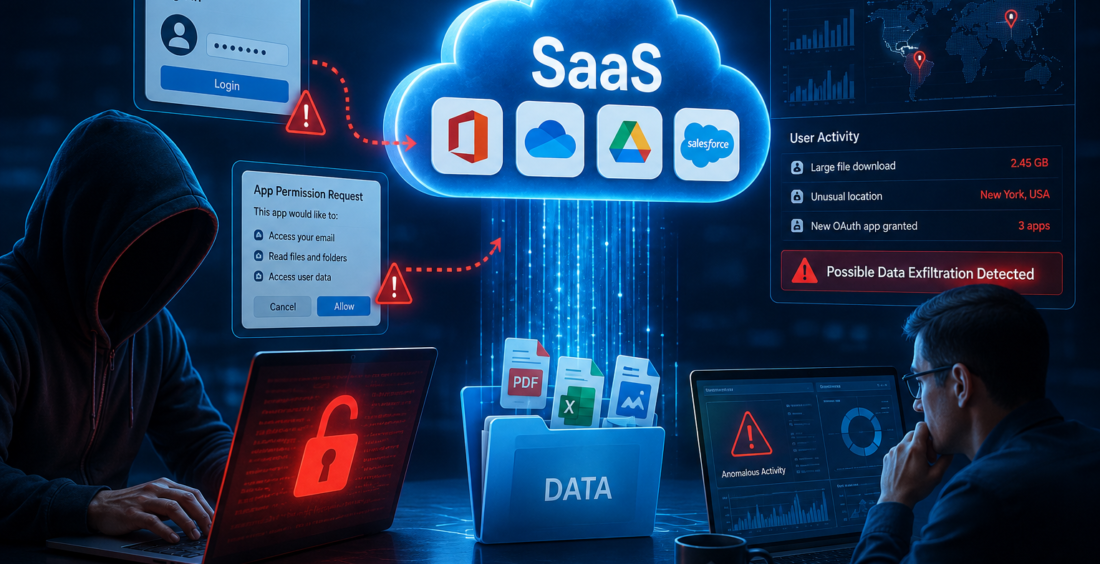
SaaS data extortion is changing the way businesses need to think about cybersecurity. Attackers do not always need to infect a server, encrypt files or deploy obvious malware. Sometimes they simply gain access to a trusted cloud account and start downloading data.
Email, customer records, sales platforms, cloud storage and collaboration tools now hold some of a company’s most valuable information.
If criminals can reach that data through a stolen identity or abused application, they may be able to create pressure without touching the traditional network at all.
Why SaaS Has Become an Attractive Target
Software-as-a-service platforms make work easier because employees can reach important applications from almost anywhere.
A compromised account may provide access to email, shared files, customer information or business applications without requiring the attacker to break into an office network first.
Microsoft documented campaigns in 2026 where threat actors targeted SaaS applications such as Salesforce and abused trusted OAuth relationships for unauthorized access, persistence and data theft.
The attack can look like legitimate cloud activity because the criminal is using a real account or authorized connection.
Data Theft Can Be Enough
Traditional ransomware often creates visible disruption. Files become unavailable, systems stop working and employees know something is wrong.
SaaS data extortion can be quieter.
An attacker may spend time searching cloud applications, identifying valuable information and downloading it before anyone notices. The company may continue operating normally while sensitive data is leaving.
Google Threat Intelligence tracked ShinyHunters-branded activity in 2026 where stolen SaaS data was followed by extortion demands and threats to publish information.
There may be no encrypted server to restore. The crisis begins because the attacker already has a copy.
Identity Becomes the Main Door
If an attacker steals credentials, captures a session or persuades someone to approve malicious access, they may enter through the same login process employees use every day.
Strong multi-factor authentication still matters, but companies should also watch for unusual behavior after login. A valid account suddenly downloading thousands of files or accessing unfamiliar applications deserves attention.
The important question is not only whether someone authenticated successfully. It is whether what they are doing afterward makes sense.
Connected Apps Can Create Hidden Access
Employees often connect third-party applications to cloud accounts to save time.
A productivity tool may request permission to read files, access email or interact with customer data. These connections can be legitimate, but they can also create access that survives beyond a normal login session.
Microsoft’s 2026 research on ShinyHunters-linked activity showed attackers abusing OAuth relationships to reach SaaS data.
Organizations should know which applications are connected, what permissions they hold and who approved them.
Old or unnecessary integrations should not remain trusted forever simply because nobody remembers installing them.
Backups Still Matter in the Cloud
Some businesses assume SaaS providers automatically solve the backup problem.
Cloud providers build resilient services, but organizations are still responsible for understanding how their data can be recovered.
If an attacker deletes information, changes records or compromises an administrator account, the business needs to know what recovery options exist.
Backups also need separation from the identities most likely to be attacked. An administrator account that can reach production data should not automatically control every recovery copy.
Recovery will not undo stolen data, but it can prevent extortion from becoming an operational shutdown as well.
Watch for Unusual Data Movement
SaaS security needs visibility into how information is being used.
A salesperson exporting a customer list may be normal. The same account downloading an entire database at an unusual time may not be.
Security teams should pay attention to large exports, new application permissions, unusual login locations and sudden changes in account behavior.
The value comes from connecting them. A password reset followed by a new OAuth grant and a large data download tells a much stronger story than any event viewed alone.
SaaS Security Is Now Business Security
SaaS platforms have become central to daily operations, which means attacks against them are no longer side issues for the IT team.
A breach can expose customer information, contracts, intellectual property and internal communications. It can also create legal, financial and reputational pressure even when no malware appears.
Businesses need to know which SaaS platforms hold critical data, who can access them and which third-party applications are connected.
They also need a plan for revoking sessions, removing malicious permissions and investigating what information was taken.
The old ransomware question was often, “Can we restore our files?”
The newer cloud question is, “What happens if the attacker never encrypts anything and simply steals the data?”
That shift is why SaaS data extortion deserves a place in every modern cybersecurity conversation.
Contributed by GuestPosts.biz
Further Reading: Cyber Gear Thought Leadership Series







Comments are closed.