
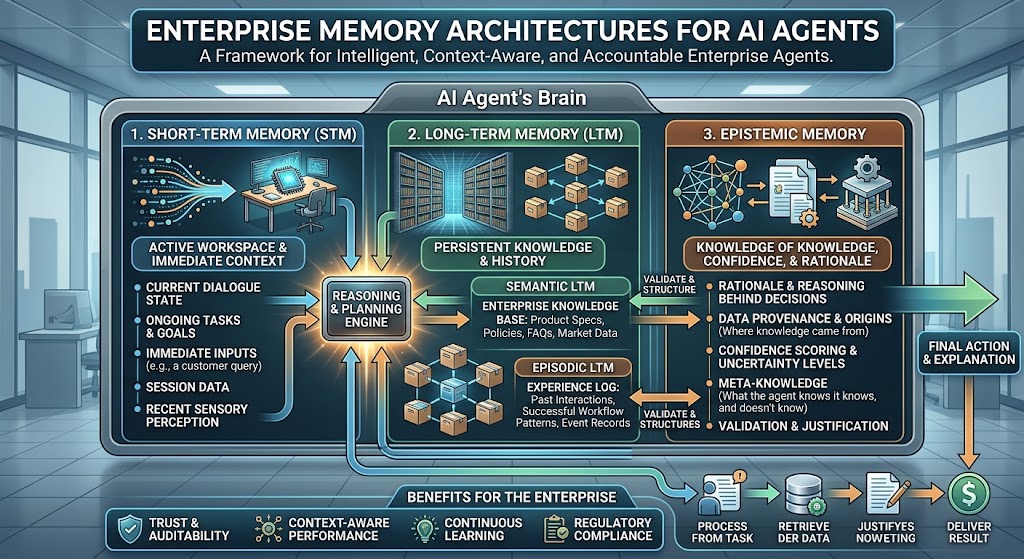
For an independent AI agent to function effectively over extended enterprise workflows, a robust memory architecture is paramount. Early iterations of large language model implementations had one simple trait: statelessness, as each prompt interaction began afresh with no memory held over from previous prompts. If an interaction exceeded the model’s context window limit, early systems would truncate the conversation context, forgetting crucial initial instructions, operational constraints, and task execution progress.
To expect an independent software agent to manage multifaceted enterprise processes (month-end financial audit or international shipping disruption coordination) without persistent memory would result in inevitable operational failure. To realize truly independent digital workers, enterprise software architects are engineering multi-peta-byte memory systems specifically for agentic runtimes.
The Three Pillars of Enterprise Agent Memory
Modern agentic memory architectures separate state retention across three distinct layers of memory that model the three pillars of human cognition:
• Short-Term Working Memory: Tracks current contextual awareness during an active execution session. Short-term memory retains current sub-goal status, intermediate tool call parameters, and recent system error traces within the active model context window.
• Long-Term Episodic Memory: Stores agent’s historical execution experiences, past workflow decisions, and historical tool execution logs across sessions. Long-term memory permits agents to recall how similar operational edge cases were resolved in previous months.
• Semantic & Epistemic Memory: Retains structured corporate knowledge, enterprise domain taxonomies, regulatory compliance rules, and entity relationships retrieved dynamically through Knowledge Graphs and vector databases.
How Persistent Memory Boosts Operational Performance
Multi-layered memory architectures fundamentally improve an agent’s stability, speed, and accuracy over time. Consider an autonomous customer support agent that manages complex enterprise account queries. Without long-term episodic memory, the agent views each customer interaction as an independent case, asking the same basic diagnostic questions and frustrating clients. With an enterprise memory architecture, the agent instantly accesses previous account issues, customer configuration preferences, and resolution patterns from long-term episodic memory. The agent combines short-term working memory of the current chat and semantic knowledge of enterprise product manuals to resolve the customer’s issue within seconds. Enterprises interested in deploying stateful agent networks can turn to custom AI agent developers to build tailored memory frameworks.
Data Governance, Privacy, and Memory Hygiene
While memory is essential for agent autonomy, long-term memory stores present critical data privacy and governance considerations. Memory repositories must adhere to corporate data retention policies and privacy mandates such as GDPR and CCPA, including the “right to be forgotten.”
If an agent has PII or unencrypted credentials stored within its long-term episodic memory, security vulnerabilities can arise. Enterprise IT teams should implement automated memory hygiene protocols, scrubbing sensitive PII before committing state to long-term storage, enforcing data encryption at rest, and implementing strict access boundaries across user sessions. Implementing strong state management with enterprise AI Agent frameworks ensures that agentic memory systems remain secure, compliant, and performant.
As enterprise agent deployments evolve, persistent memory will underpin corporate digital intelligence. Organizations that build stateful, secure agentic memory layers will unleash digital workforces that become smarter, faster, and more effective over time.
Contributed by GuestPosts.biz
Further Reading: Cyber Gear Thought Leadership Series







No comments yet.